

Canalblog Tous les blogs Top blogs Religions & Croyances
Editer l'article Suivre ce blog Administration + Créer mon blog
MENU
Piano et entraînement de l'esprit
Publicité
A lire...
19 juin 2017

Souvenirs musicaux

Hier j'ai eu l'occasion d'entendre quelqu'un qui jouait très bien du piano. Bon, pas du Liszt, il n'y avait pas de difficultés techniques réelles, mais enfin, ça avait la qualité professionnelle. Ce qui est très rare, et qui demande évidemment un prof exceptionnel. Et donc, je repensais à un ami qui aurait bien voulu devenir professionnel, qui a fourni en son temps la quantité de travail nécessaire, mais qui est toujours resté amateur parce qu'il n'a jamais eu le prof qui aurait transformé la chenille en papillon. Car ils sont très rares eux aussi, même dans les conservatoires. Et très chers dans le privé (entre 5 et 10 fois le tarif ordinaire). Alors je me disais, "quand même le karma, ça craint", puisque quel que soit le travail fourni, il y a un facteur impossible à maîtriser, consistant à dénicher la bonne personne. Quoique, bon, à la réflexion, l'opportunité s'est aussi présentée pour lui, et il l'a ignorée. Parce que moi j'avais un prof comme ça. Quand la fille nous a parlé de son prof, j'ai tout de suite reconnu le mien, en quelque sorte. Même école (école russe). Même genre de tarif (450F de l'heure il y a 20 ans, avec obligation de prendre 2h par semaine les 2 premières années, je vous dis pas l'investissement). Il n'enseignait évidemment qu'à des professionnels ou des gens souhaitant le devenir. J'ai entendu quelques uns de ses élèves, bon, c'était vraiment excellent. Il n'était pas forcément connu dans les milieux classiques, vu qu'il enseignait plutôt le jazz, mais enfin, il connaissait bien aussi. Il m'a dit un jour que son propre professeur prenait le double au niveau des tarifs. La différence entre lui et un gars connu qui donne des masterclass, c'est qu'il reprenait toute la technique (sur 3 mois), et à mon avis c'était plutôt une bonne idée, bien que ça soit plutôt méprisé en général. C'est probablement dû au fait que ses élèves n'étaient pas tous médailles d'or du conservatoire, mais qu'il y avait aussi là des quasi-débutants, parfois des enfants (une fille de 13 ans qu'il avait depuis 5 ans, je l'ai entendue jouer à la perfection une étude de Chopin). Bref, il était exactement ce qu'il aurait fallu à mon ami. Alors je lui avais proposé d'aller le voir, et il m'avait répondu qu'il avait déjà un excellent professeur. Donc je n'avais pas insisté. Certes, il lui aurait fallu prendre un prêt étudiant rien que pour payer la première année (sans compter qu'il aurait pu aller le voir une fois pour voir ce que ça valait), mais qu'est-ce que c'est un prêt étudiant au regard d'une carrière ? Parce que même en un an, il aurait corrigé ses principaux défauts. En effet, la première année, il donnait une méthode de travail, et puis ensuite, c'était plus le truc classique, la musicalité etc, ce qui est beaucoup plus facile à trouver. Mais la méthode de travail, vous ne trouvez personne pour vous l'inculquer. Parce que ça va plus loin que le piano. Comme il le disait lui-même, sa méthode, ça vous changeait une vie. Et je peux en témoigner. C'est le gars qui vous apprend à vous organiser l'esprit et à éliminer définitivement toute confusion, parce que vous avez une méthode pour aborder les choses, que ça soit du piano, du jardinage, ou n'importe quoi d'autre. Je l'ai vu par exemple avec le concert d'orgue, où j'ai un peu aidé. Disons qu'avec mon ami, on a conçu ensemble 2 impros. Donc sa méthode à lui, c'est de couvrir une page d'affreux gribouillis, dont il était évident que le lendemain, il ne saurait plus les déchiffrer. Et surtout qui ne contenaient pas les infos les plus importantes, c'était peut-être ça le principal. Je veux dire, les infos qui sont évidentes quand tout va bien mais que sous l'effet du stress on va mystérieusement oublier (sur quelle clavier dois-je jouer telle partie ?). Et puis aussi le truc très con : sur un morceau sans partition, à quel moment mes assistants savent-ils les jeux qu'ils doivent mettre ? Bon, c'est comme dans la vraie vie. Par exemple ma copine sait gérer parfaitement tous les détails (s'occuper du jardin au jour le jour), par contre la planification à long terme fait un peu défaut. Et surtout la gestion des imprévus. Ça, je crois que dans ma vie, je n'ai rencontré à peu près personne qui savait gérer les imprévus, parce qu'il faut commencer par les "voir". Or comme ils sont imprévus on a une certaine tendance à ne pas les voir, justement. Alors quel rapport entre un prof de piano et la gestion des imprévus ? Pas direct. On apprend d'abord à s'organiser l'esprit pour les circonstances ordinaires. Et puis ensuite on se rend compte que l'esprit fonctionne de la même manière avec les circonstances extraordinaires. Il élimine les solutions impossibles et opère ensuite une recherche et un classement des solutions possibles. Mais comme je l'ai dit plus haut, le problème est plus de voir, et je crois que c'est du ressort de la pratique.  Bon, il fait trop chaud, je n'arrive plus à réfléchir.

Publicité
Commentaires
Publicité
Piano et entraînement de l'esprit
Publicité
Derniers commentaires
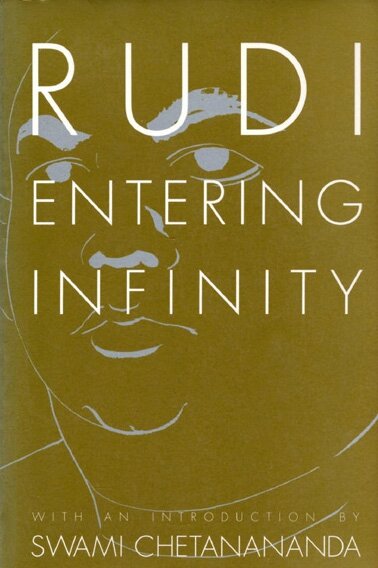
Enseignements de Rudi

Fear
We have the capacity in our minds to create that which we are most afraid of; in the same way that we bury some ignorance like a grain of sand inside the shell of an oyster and build around it until we come up with the end product, which in this case is not a pearl.

God
It is finally this consciousness that allows a human being to feel God as the constant energy that is absorbed by all of the chakras, filling him with sweetness and joy. Not feeling happy is only the result of not being in tune with this force and not having the consciousness to contain it. For whatever reason we fail in holding onto energy, we must look to ourselves. We cannot blame anybody or anything. It is only our lack of capacity to hold that which is given.

Revelations

In all teachings, the temptations that appear during the revelation period are those things we identify with, that take away the energy or content from the experience. It is the courage to put the bottom on the void, so that the incoming energy is not lost during any experience, that is required. This enables a person to grow endlessly, by surrendering content as fast as it manifests itself.

Seekers
It is a remarkable event when somebody presents a situation that exposes their real need. It is rare when even half the truth is given. Usually a situation is distorted beyond recognition. It is as if somebody is saying to me that if I can dig out the real situation, maybe they will allow me to help them. When a situation occasionally is presented in all its nakedness, it is only because the person is defenseless at a particular moment. As soon as they have one stitch to put on their back, they again retreat into themselves, distorting what they said and what they think you said. The ability to hear and see is rare in this world. It only exists in somebody who truly wishes to grow. This has not, unfortunately, been the attitude of most seekers. So few succeed in reaching their goal that it is safe to assume that there are few who honestly pursue a spiritual life, and even then, very few teachers who cater to anything that brings the realism that allows for enlightenment.

Spirituality

Spirituality is not about being where you think you should be. It is not about being where you want to be. Spirituality is about being on the highest point of an ascending energy that keeps growing and growing.
As this energy grows, it completely destroys every level of truth as you live it. This does not mean the truth that has been destroyed was not real. It was real for the level on which you existed before. With students, I am not interested in how long they are with me; I am just interested in one thing: whether or not they are strong enough to break up the horizontal level and continue growing. For myself, I do not want to limit myself by what I was. I do not think, "I did all this work to get to here." That is baloney. That is making a drama of your life and trying to build an image for yourself. The point is to keep growing. It is to have the courage to keep growing, even if it pulls apart the structure of your life. Then it is freeing you. There is nothing wrong with pulling apart the structure. What is wrong is to build yourself into a coffin and then stay there and try to justify it. Either you are working to live on a higher level all the time and to have a rebirth all the time, or you are trying to find justification for staying the way you are.
The whole point of what we do is to destroy matter, which is this horizontal plane we sit on: the earth. It is to translate this physical and material matter into spiritual force. This is our work.

Surrender
You sit down. Inside you, what is going on? You want to be right. "I'm a nice guy, how could this person do this to do me? How could someone take advantage of me in the business world," or "How can somebody not love me? Don't they understand what I did?" Inside you, these muscles close up; they are protecting you. They are protecting your ego, protecting the image you have of yourself. You sit down to take your breath, and you find that something has robbed you of your heart. What robbed you of your heart ? The need to be right. These muscles do not want to open. They would rather you were safe and secure behind the wall than outside the wall.
Surrendering is opening all the muscles. This is the real test of your surrender in a situation. Can you breathe ? Does the throat open to receive the energy ? Are you free to receive this energy and open and see what your condition really is ? If you find out you are constricted in your heart, you have a pain in your back, or you can't get the air down, what does it mean? It means you are closed. What closed you? It does not matter what closed you, you do not have to find the rational reason, you just have to open. You sit and work, and you breathe. I do not have that problem anymore, but I used to sit and take that breath six hundred times in one day, sometimes, to begin to feel a little crevice start to open. If you are closed, you are dead. You can't be right if you are closed. Can a closed person know what he or she did or did not do ? So, if you find that you are closed, you have to drop the whole issue of whether the other person is or is not right.


Gratuit en ligne :

Snap8

Pas cher en Kindle :
Snap7 iow

Pas donnés sauf si vous avez de la chance :
EI bcc

Visiteurs
Depuis la création 56 784
Publicité
Publicité