

Canalblog Tous les blogs Top blogs Religions & Croyances
Editer l'article Suivre ce blog Administration + Créer mon blog
MENU
Piano et entraînement de l'esprit
Publicité
A lire...
17 mars 2017

Thomas Merton

J'ai lu la biographie de Thomas Merton La nuit privée d'étoiles : Suivie de La paix monastique. C'est évidemment bien mieux que Jean Yves Leloup qui en comparaison semble être un enfant, mais au final, cela m'interroge sur le paradigme chrétien, et son pouvoir d'embrouiller les plus brillants esprits. Ce qu'on peut dire, c'est qu'avec Merton, on a quand même un peu le meilleur des cisterciens avant Vatican 2, mais ce meilleur me semble avoir sacrément dérivé. Ou alors les ordres monastiques n'ont finalement jamais eu pour objectif de produire des saints, et les saints se sont produits malgré eux. Parce que dans cet état de "liberté", qui nous est promis là, il me semble qu'il y a à la base un certain nombre de croyances fondamentales, qu'ils vont bien entendu appeler "foi", mais qui sont fort sujettes à caution. Je veux dire que si on commence à essayer de les vérifier, on se rend compte que ça marche pour certains, mais que pour d'autres c'est moins certain.

Par exemple, cette liberté vient de ce qu'on confie sa vie à Dieu, et qu'on n'a plus, en quelque sorte, à en assumer la responsabilité. C'est bien pratique en un sens, car cela permet de se défaire du pire fardeau de l'existence humaine - c'est le but - mais un peu trop à bon compte. Qu'est-ce qui lui dit que c'est bien Dieu qui l'a pris en charge ? Quand on voit qu'il est mort à 53 ans dans un hôtel en Inde à cause d'un ventilateur défectueux (un peu comme Claude François finalement), on se demande le sens que ça peut bien avoir. Par ailleurs, à la fin de son livre, il se plaint en termes à peine voilés. Il voulait être contemplatif, mais ses supérieurs ont finalement préféré l'utiliser à écrire des dizaines de bouquins pour faire de la pub à l'Eglise. A quoi sert-il de "sauver des âmes" au prix de celles qui les sauve ? Cela n'a strictement aucun sens. Qu'est-ce qu'on sauve chez ces âmes ? Disons qu'ils ont une vie un peu plus décente au lieu d'avoir une vie un peu moins décente, mais de toutes façons, à la mort, tous les éléments constitutifs se séparent les un des autres, et un peu plus ou un peu moins décent, cela ne nous met pas plus près du corps de gloire.

Bref, on a finalement un abandon bien pratique de sa propre responsabilité au mains de supérieurs qui ne sont pas particulièrement compétents pour sanctifier les gens, tout cela au nom d'un salut qui est proclamé comme étant acquis par ces moyens, mais même un Maurice Zündel aura finalement montré que c'est un voeu pieux. Quant à Dieu, il n'a probablement pas grand chose à voir là-dedans, bien qu'il y ait certainement des entités du surmental qui s'en mêlent. Mais pas trop quand même. Il est intéressant de voir aussi une certaine partialité, par exemple avec la "Petite Thérèse". Il lui confie son frère, qui est appelé à combattre pendant la seconde guerre mondiale, en nous affirmant qu'elle le protège efficacement et qu'il s'en félicite. Peu de temps après, le frère sombre dans une sorte de déprime (il bosse dans un bombardier), et puis son avion est descendu au dessus de la mer du Nord, et il meurt dans le canot de sauvetage. Apparemment pas en invoquant le nom de Dieu. Comme par hasard on n'entend plus parler de la Petite Thérèse. Donc on se demande finalement les grâces qu'elle lui a obtenues, ainsi que tous les autres saints d'ailleurs, puisqu'il nous explique qu'ils nous obtiennent toutes sortes de grâces.

Bref, je trouve un peu dommage de trouver une sorte de Christianisme méthode Coué chez un gars aussi intelligent. Car tout ce dont il se félicite, finalement, on n'en voit pas trop l'effet. Cela semble surtout l'effet d'une méthode bien établie pour faire croire aux gens que tout va bien. On prend leur vie en main, on les fait bosser aux champs, ou à écrire des bouquins, on leur dit que grâce à ça ils sont sauvés, et ils sont assez bêtes pour le croire, même les brillants esprits. Enfin, comme il le dit lui-même, aux champs on ne prie pas beaucoup, faut pas rêver. Aux champs on travaille, non pas comme les maîtres zen qui ont intégré l'état naturel, mais comme des ânes.

Finalement je préfère un Trungpa qui regarde quand même la vérité en face. Notre vie, c'est à nous de lui donner un sens, et personne ne va le faire à notre place. J'exclus le cas des saints, dont nous ne sommes pas, et qui sont manifestement guidés par d'autres puissances (qu'ils prennent pour Dieu, mais qui ne le sont clairement pas). Faire une vertu de l'abandon de notre responsabilité alors que cela tient plus certainement d'une sorte de faiblesse de l'âme, c'est de la mauvaise foi. Cela me fait penser à un ancien ami qui me disait qu'il préférait s'en remettre à ses confesseurs qu'à lui-même parce qu'il n'avait jamais su se diriger. Thomas Merton est dans le même cas. Mais personne ne sait se diriger, ça s'apprend, notamment en regardant les autres. Moi franchement ça m'arrangerait que des voix angéliques me disent "fais-ci fais-ça" en me donnant la force pour le faire et en m'assurant de la sainteté en cours de route. Malheureusement c'est à chacun de se talquer son karma.
   

Publicité
Commentaires
Publicité
Piano et entraînement de l'esprit
Publicité
Derniers commentaires
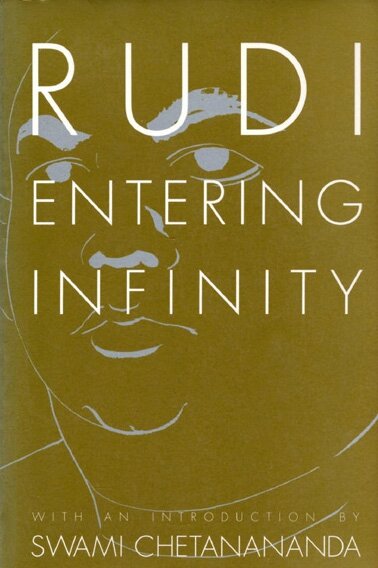
Enseignements de Rudi

Fear
We have the capacity in our minds to create that which we are most afraid of; in the same way that we bury some ignorance like a grain of sand inside the shell of an oyster and build around it until we come up with the end product, which in this case is not a pearl.

God
It is finally this consciousness that allows a human being to feel God as the constant energy that is absorbed by all of the chakras, filling him with sweetness and joy. Not feeling happy is only the result of not being in tune with this force and not having the consciousness to contain it. For whatever reason we fail in holding onto energy, we must look to ourselves. We cannot blame anybody or anything. It is only our lack of capacity to hold that which is given.

Revelations

In all teachings, the temptations that appear during the revelation period are those things we identify with, that take away the energy or content from the experience. It is the courage to put the bottom on the void, so that the incoming energy is not lost during any experience, that is required. This enables a person to grow endlessly, by surrendering content as fast as it manifests itself.

Seekers
It is a remarkable event when somebody presents a situation that exposes their real need. It is rare when even half the truth is given. Usually a situation is distorted beyond recognition. It is as if somebody is saying to me that if I can dig out the real situation, maybe they will allow me to help them. When a situation occasionally is presented in all its nakedness, it is only because the person is defenseless at a particular moment. As soon as they have one stitch to put on their back, they again retreat into themselves, distorting what they said and what they think you said. The ability to hear and see is rare in this world. It only exists in somebody who truly wishes to grow. This has not, unfortunately, been the attitude of most seekers. So few succeed in reaching their goal that it is safe to assume that there are few who honestly pursue a spiritual life, and even then, very few teachers who cater to anything that brings the realism that allows for enlightenment.

Spirituality

Spirituality is not about being where you think you should be. It is not about being where you want to be. Spirituality is about being on the highest point of an ascending energy that keeps growing and growing.
As this energy grows, it completely destroys every level of truth as you live it. This does not mean the truth that has been destroyed was not real. It was real for the level on which you existed before. With students, I am not interested in how long they are with me; I am just interested in one thing: whether or not they are strong enough to break up the horizontal level and continue growing. For myself, I do not want to limit myself by what I was. I do not think, "I did all this work to get to here." That is baloney. That is making a drama of your life and trying to build an image for yourself. The point is to keep growing. It is to have the courage to keep growing, even if it pulls apart the structure of your life. Then it is freeing you. There is nothing wrong with pulling apart the structure. What is wrong is to build yourself into a coffin and then stay there and try to justify it. Either you are working to live on a higher level all the time and to have a rebirth all the time, or you are trying to find justification for staying the way you are.
The whole point of what we do is to destroy matter, which is this horizontal plane we sit on: the earth. It is to translate this physical and material matter into spiritual force. This is our work.

Surrender
You sit down. Inside you, what is going on? You want to be right. "I'm a nice guy, how could this person do this to do me? How could someone take advantage of me in the business world," or "How can somebody not love me? Don't they understand what I did?" Inside you, these muscles close up; they are protecting you. They are protecting your ego, protecting the image you have of yourself. You sit down to take your breath, and you find that something has robbed you of your heart. What robbed you of your heart ? The need to be right. These muscles do not want to open. They would rather you were safe and secure behind the wall than outside the wall.
Surrendering is opening all the muscles. This is the real test of your surrender in a situation. Can you breathe ? Does the throat open to receive the energy ? Are you free to receive this energy and open and see what your condition really is ? If you find out you are constricted in your heart, you have a pain in your back, or you can't get the air down, what does it mean? It means you are closed. What closed you? It does not matter what closed you, you do not have to find the rational reason, you just have to open. You sit and work, and you breathe. I do not have that problem anymore, but I used to sit and take that breath six hundred times in one day, sometimes, to begin to feel a little crevice start to open. If you are closed, you are dead. You can't be right if you are closed. Can a closed person know what he or she did or did not do ? So, if you find that you are closed, you have to drop the whole issue of whether the other person is or is not right.


Gratuit en ligne :

Snap8

Pas cher en Kindle :
Snap7 iow

Pas donnés sauf si vous avez de la chance :
EI bcc

Visiteurs
Depuis la création 56 791
Publicité
Publicité